
From Concept to Patent: Loureiro’s In Situ Solution for PFAS Contamination in Drinking Water Aquifers
June 19th, 2025

Meet the Inventor: Mike Marley
With nearly five decades of experience in environmental remediation, Mike Marley has built a reputation on blending cutting-edge science with practical engineering implementation. A civil engineer and founder of XDD (acquired by Loureiro in 2021), Mike has advised on contaminated site cleanups across the U.S. and internationally.
“I’ve always believed in combining state of the art science with good engineering,” he says. “You need real-world solutions that work — and that clients can afford.”
His involvement with PFAS goes back to 2007, well before the issue entered mainstream headlines. Since then, he’s worked on early treatability studies, developed cleanup strategies, and, most recently, helped engineer a patent-pending system that may change how we think about PFAS remediation in drinking water aquifers.
What Are PFAS — and Why Are They So Hard to Treat?
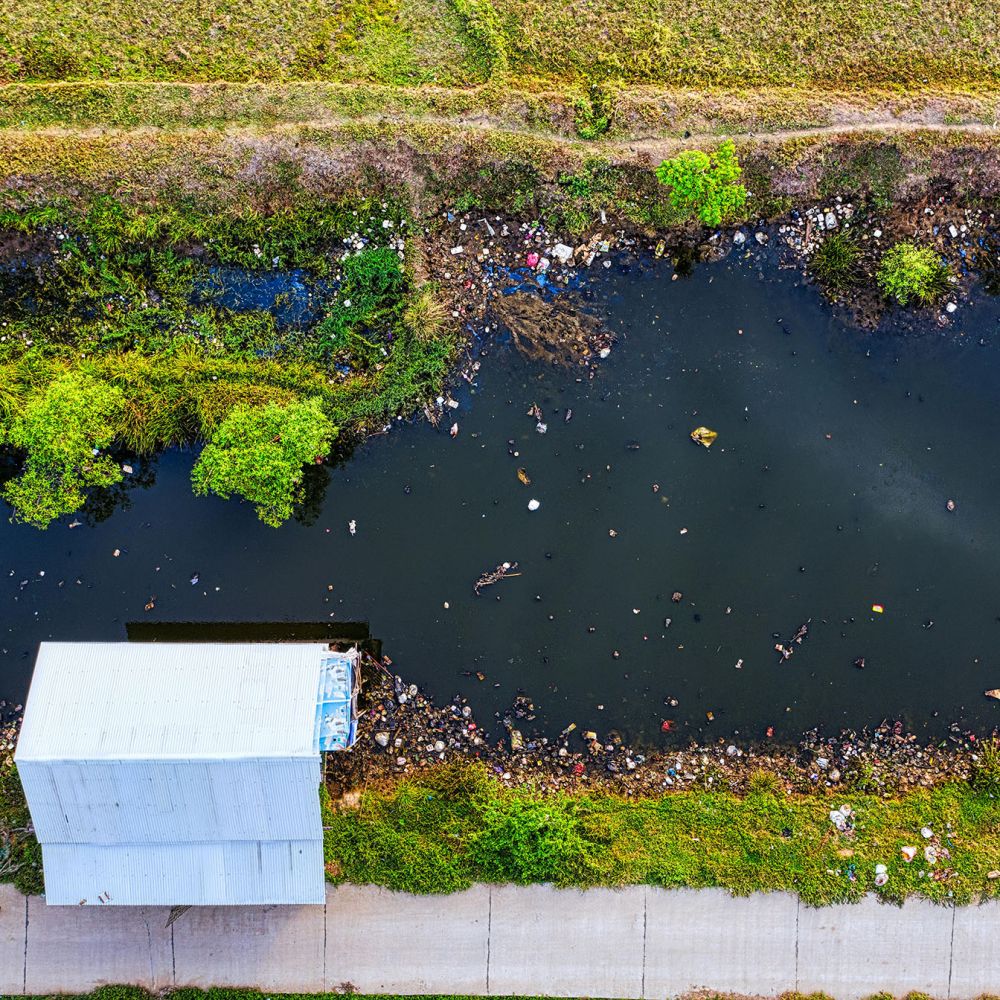
PFAS (Per- and Polyfluoroalkyl Substances) are a class of synthetic chemicals found in everything from nonstick pans to firefighting foam. They’re often called “forever chemicals” because they don’t break down easily under natural conditions and can be found in water, soils, and even rainfall around the world.
The EPA has proposed strict new limits on a few PFAS in drinking water, but addressing the problem is anything but straightforward.
The conventional approach is to install an above-ground treatment system (like granular activated carbon or ion exchange), pump water out of the aquifer, treat it, and then distribute it. But this approach comes with serious drawbacks:
- Capital costs can exceed $10M–$20M for small to mid-size towns
- Ongoing maintenance can cost $250K–$500K/year
- New regulations and evolving PFAS science create long-term uncertainty for remedy selection
As Mike puts it: “The client has a problem—how do we solve it without charging an arm and a leg?”
A Smarter Approach: In Situ Filtration
Instead of treating water at the surface, why not treat it underground before it enters the well?
That’s the core idea behind Loureiro’s in situ PFAS filtration system. The system works by injecting an adsorbent, commonly ultra-fine activated carbon into targeted zones of high PFAS flux in the aquifer. This creates a permeable subsurface filter wall that intercepts and captures contaminants as groundwater flows toward the production well.
The beauty of the design is its flexibility:
- It can be used as a temporary solution (5–10+ years) while towns plan long-term investments
- It can also act as a permanent barrier when PFAS is tied to a specific source or plume
- It costs less than 20% of traditional systems
- And best of all—there’s no O&M cost
Real World Examples
In Southington, CT, Mike — alongside President Dave Fiereck, Director Dave Payne, and members of the Loureiro team—confronted a familiar challenge: several municipal wells exceeded PFAS limits, and the conventional solution carried a $20M price tag.
Using aquifer profiling tools, the team mapped PFAS concentrations to identify the “slice of the pie” responsible for the exceedances. By targeting just that segment with a subsurface carbon filter wall, the solution minimized cost, reduced treatment footprint, and delivered meaningful results — without treating the entire aquifer.
In Massachusetts, a smaller town is implementing a similar strategy. One of three drinking wells had to be shut down due to elevated PFAS levels, leaving the community in a vulnerable position. Early data suggests the PFAS plume may stem from a State public works yard, opening the door for a responsible-party remediation strategy using Loureiro’s in situ method.
Patent Pending, Decision Expected This Summer
CEO Brian Cutler recognized the potential benefit to Loureiro and asked Mike to pursue the patent in 2024. Because of his track record and the technology’s potential, the application was submitted through a fast-track process. Loureiro expects to hear back from the U.S. Patent Office by July or August 2025.
“This is one of those rare cases,” Mike says, “where the simpler answer is also the smarter one.”
Innovation That Moves Us Forward
This innovation isn’t just a technical milestone — it’s a reflection of who we are as a firm. It represents the best of Passionate Ingenuity: solving complex problems with practical creativity, deep technical insight, and an unwavering commitment to client success. It’s a solution born from real project needs, developed in close collaboration with municipalities, and designed to work within the constraints our clients face every day.
As we continue to grow our role in design-build delivery, pursue government and DOD contracts, and expand our environmental service offerings, this patent-pending system is a prime example of the kind of integrated, forward-thinking approach that sets Loureiro apart.